

Why Does Your Dentist Ask About Your Medical History?
When you visit a new dentist, one of the first things you may be asked to complete is a medical history form. For some patients, this can feel like a lot of information to provide for a dental appointment. After all, if you are there for your teeth, why does your dentist need to know about your overall health?
The answer is simple: your mouth is connected to the rest of your body. Your medications, health conditions, allergies, past surgeries, and lifestyle factors can all influence how your dentist cares for your teeth and gums.
For patients in Hayden, Coeur d’Alene, Rathdrum, Post Falls, and the surrounding North Idaho area, sharing accurate medical history helps your dental team provide safer, more personalized care from the very first visit.
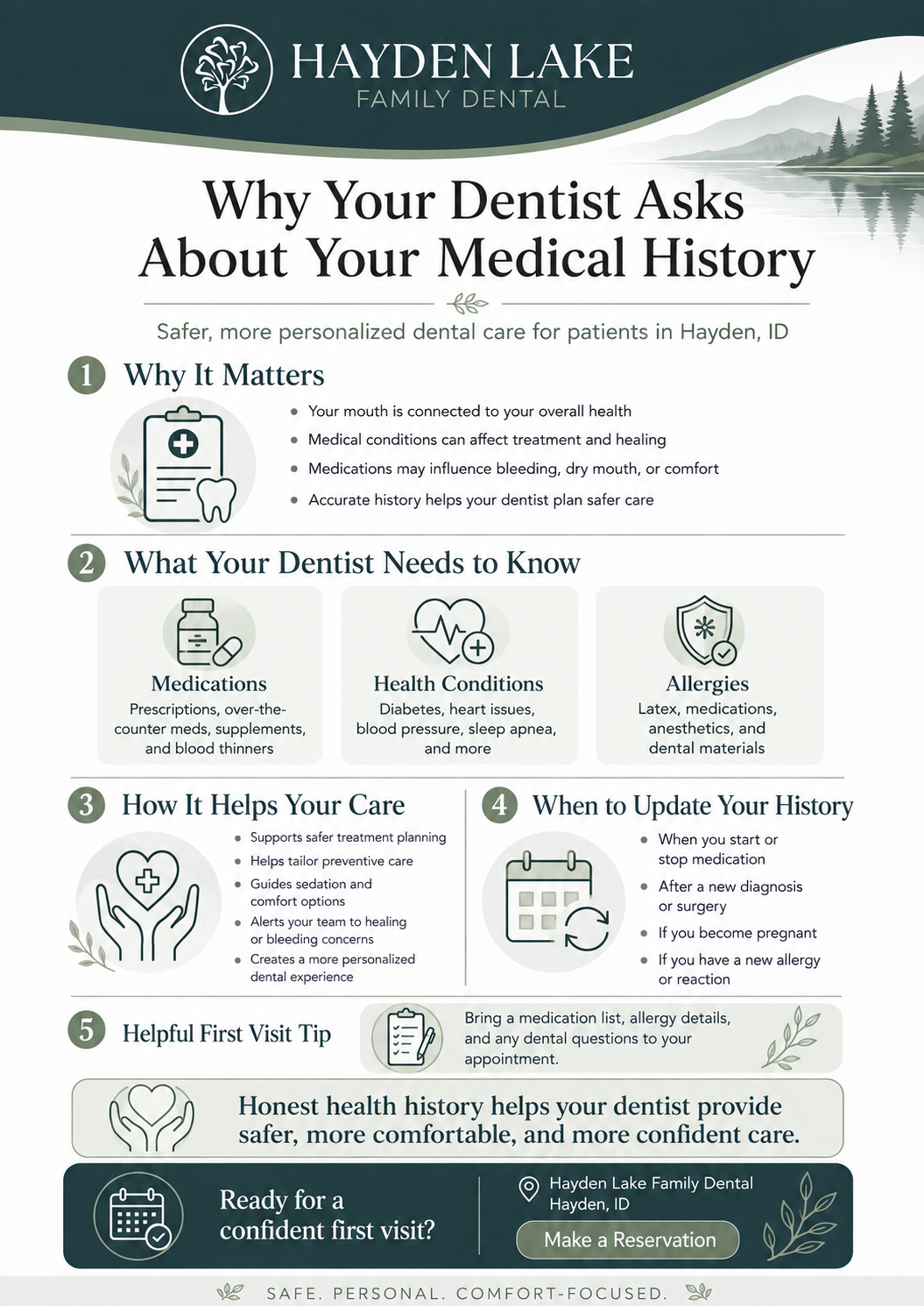
Your Oral Health and Overall Health Are Connected
Dental care is not separate from whole-body health. Many health conditions can affect your mouth, gums, healing ability, and treatment options. At the same time, oral health problems can sometimes provide clues about what may be happening elsewhere in the body.
For example, certain medical conditions may increase the risk of gum inflammation, dry mouth, infection, or slower healing after dental treatment. Some medications can affect bleeding, saliva flow, or how your body responds during procedures.
That is why your dentist asks questions about more than just your teeth. The goal is to understand the full picture of your health so your care can be planned safely and thoughtfully.
What Information Does Your Dentist Need?
A dental medical history form helps your dentist identify anything that may influence your exam, cleaning, X-rays, treatment plan, comfort options, or follow-up care.
Your dentist may ask about:
Current medications
Allergies
Past surgeries
Medical conditions
Heart health history
Diabetes
Pregnancy
Blood pressure concerns
Joint replacements
Cancer treatment history
Tobacco or nicotine use
Sleep apnea
Anxiety or past dental experiences
Previous reactions to anesthesia or sedation
This information helps your dentist make informed decisions about your treatment and avoid unnecessary risks.
Why Medication Information Matters
Medications are one of the most important parts of your health history. Even medications that do not seem related to your teeth can affect dental care.
Some medications may cause dry mouth, which can increase the risk of cavities and gum irritation. Others may affect bleeding, healing, or how your dentist plans certain procedures.
Your dental team may ask about:
Prescription medications
Over-the-counter medications
Supplements
Blood thinners
Allergy medications
Blood pressure medications
Diabetes medications
Anxiety medications
Bone health medications
It is helpful to bring a current medication list to your appointment or update your forms whenever something changes.
Medical Conditions Can Affect Dental Treatment
Certain health conditions may change how your dentist approaches treatment. This does not mean you cannot receive dental care. It simply means your dentist may need to take extra precautions, coordinate timing, or adjust the treatment plan.
Medical conditions that may be important include:
Diabetes
Heart conditions
High blood pressure
Autoimmune conditions
Bleeding disorders
History of stroke
Cancer treatment
Osteoporosis
Sleep apnea
Immune system concerns
For example, a patient with diabetes may need closer attention to gum health and healing. A patient with high blood pressure may need monitoring before certain procedures. A patient with a history of anxiety may benefit from a more comfort-focused appointment plan.
Why Dentists Ask About Allergies
Allergies are an important safety consideration during dental care. Your dentist needs to know if you have had allergic reactions to medications, latex, metals, adhesives, or other materials commonly used in dental offices.
Common allergy-related questions may include:
Are you allergic to any medications?
Have you reacted poorly to local anesthetic?
Do you have a latex allergy?
Are you sensitive to certain dental materials?
Have you ever had a reaction during medical or dental treatment?
Sharing allergy information helps your dental team choose safer materials and avoid products that may cause a reaction.
Dental Anxiety Is Part of Your Health History Too
Medical history is not only about physical conditions. Your emotional comfort matters as well. If you have dental anxiety, a strong gag reflex, fear of needles, or past negative dental experiences, your dentist should know.
This allows the team to better support you during treatment.
Patients with dental anxiety may benefit from:
Extra time during appointments
Clear explanations before treatment
Breaks during procedures
Comfort-focused communication
Sedation dentistry options
A slower, step-by-step treatment plan
At Hayden Lake Family Dental, comfort and confidence are important parts of the dental experience. If anxiety has kept you from scheduling care, sharing that concern can help your team create a better visit.
Why Your Dentist Asks About Past Dental Work
Your dental history is just as important as your medical history. Your dentist may ask about previous fillings, crowns, bridges, implants, root canals, extractions, orthodontic treatment, gum therapy, or dentures.
This helps your dentist understand what has already been done and what may need to be monitored.
Past dental work can affect:
Bite alignment
Tooth strength
Gum health
Future treatment options
X-ray interpretation
Cosmetic planning
Restorative recommendations
If you have had dental records or X-rays taken at another office, transferring them may also help your new dental team better understand your history.
Medical History Helps With Preventive Care
One of the biggest benefits of sharing your medical history is better prevention. When your dentist understands your risk factors, they can recommend a care plan that fits your needs.
For example, some patients may need more frequent cleanings because of gum concerns, dry mouth, diabetes, or a history of periodontal disease. Others may need fluoride support, oral cancer screenings, nightguards, or additional home care guidance.
A personalized preventive plan may include:
Routine cleanings and exams
Periodontal monitoring
Oral cancer screenings
Digital X-rays when appropriate
Fluoride recommendations
Dry mouth guidance
Nightguard evaluation
Home care coaching
Preventive dentistry is most effective when it is tailored to the individual patient.
Medical History Helps With Treatment Planning
If you need dental treatment, your medical history helps your dentist determine the safest and most appropriate approach. This is especially important for procedures such as extractions, root canals, crowns, implants, dentures, sedation dentistry, and emergency dental care.
Your dentist may consider:
Whether you heal normally
Whether you have infection risk factors
Whether sedation is appropriate
Whether medications need to be reviewed
Whether your physician should be consulted
Whether treatment should be phased over time
Whether additional monitoring is needed
This planning helps make treatment more predictable and comfortable.
Why You Should Update Your Medical History Regularly
Your health can change between dental visits. Even small updates may matter. If you start a new medication, receive a new diagnosis, have surgery, become pregnant, or experience a major health change, let your dental team know.
You should update your medical history if:
You start or stop medication
Your dosage changes
You are diagnosed with a new condition
You have surgery
You are pregnant
You develop a new allergy
You experience a reaction to medication
You begin treatment with another provider
Keeping your information current helps your dental team provide the safest care possible.
What If You Are Embarrassed About Your Health History?
Some patients feel nervous sharing personal health information, especially if they have avoided medical or dental care for a long time. Others may worry about being judged for smoking, dental anxiety, missing teeth, or past treatment decisions.
A good dental team is not there to judge you. They are there to help you move forward.
Being honest about your health history allows your dentist to create a care plan that is realistic, safe, and supportive. The more your team understands, the better they can help.
How to Prepare for Your First Visit
If you are visiting a new dental office, it helps to gather a few details ahead of time.
Before your appointment, consider bringing:
A list of current medications
A list of allergies
Dental insurance information if applicable
Recent dental X-rays if available
Medical provider contact information if needed
Notes about dental concerns or goals
Questions you want to ask your dentist
This can make your first visit smoother and more productive.
New Patient Dental Care in Hayden, ID
Your medical history helps your dentist provide care that is safer, more personalized, and better aligned with your overall health. From routine cleanings to restorative treatment, emergency dentistry, cosmetic services, and sedation options, the information you share helps your dental team understand the best way to care for you.
At Hayden Lake Family Dental, patients in Hayden and the surrounding North Idaho area receive thoughtful, comfort-focused care designed around their health, goals, and confidence. Whether you are scheduling your first visit, returning after several years, or looking for a family dentist you can trust, your health history is an important part of building a strong foundation for your care.
If you are ready to take the next step, schedule a visit with Hayden Lake Family Dental in Hayden, ID.
Frequently Asked Questions Around Dental Medical History
-
Your dentist needs your medical history because health conditions, medications, allergies, and past procedures can affect your oral health and dental treatment. This information helps your dental team provide safer and more personalized care.
-
Yes. You should tell your dentist about prescription medications, over-the-counter medications, supplements, and any recent changes. Some medications can affect bleeding, healing, dry mouth, or treatment planning.
-
Yes. Conditions such as diabetes, dry mouth, immune system concerns, and other health issues can affect gum health, cavity risk, healing, and treatment recommendations. Your dentist uses this information to better protect your oral health.
-
You should update your medical history any time your health changes. This includes new medications, new diagnoses, allergies, surgeries, pregnancy, or changes recommended by another healthcare provider.
