

How Sedation Dentistry Helps Patients With Dental Anxiety
Dental anxiety is more common than many people realize. Some patients feel nervous before routine cleanings, while others avoid dental care for years because of fear, past negative experiences, sensitive teeth, or worry about discomfort.
If that sounds familiar, you are not alone. Avoiding the dentist may feel easier in the short term, but postponed care can allow small issues to become more painful, more expensive, and more complicated over time.
For patients in Hayden, Coeur d’Alene, Rathdrum, Post Falls, and the surrounding North Idaho area, sedation dentistry can make dental visits feel more manageable. With the right level of support, many patients are able to receive the care they need while feeling calmer and more comfortable throughout their appointment.
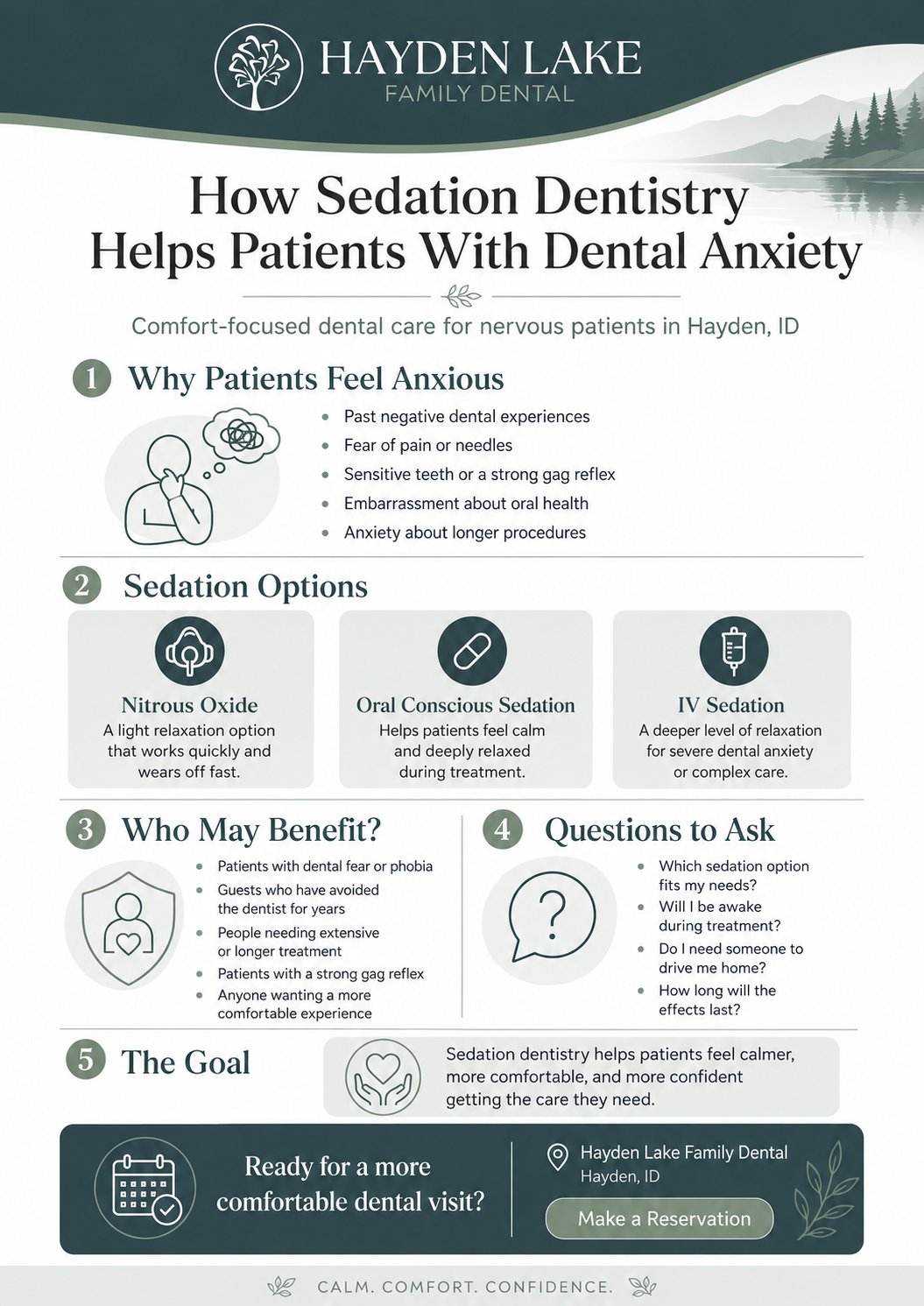
What Is Sedation Dentistry?
Sedation dentistry uses medication to help patients relax during dental treatment. Depending on the type of sedation used, patients may feel lightly relaxed, deeply calm, or have little memory of the appointment afterward.
Sedation does not replace quality dental care. Instead, it helps remove some of the stress that can prevent patients from scheduling treatment in the first place.
At Hayden Lake Family Dental, sedation dentistry is designed to support patients who feel nervous, overwhelmed, or fearful about dental care. It may be helpful for routine treatment, longer procedures, restorative work, emergency care, or patients who have had difficult dental experiences in the past.
Why Patients Experience Dental Anxiety
Dental anxiety can come from many different places. For some patients, it is connected to a painful or uncomfortable experience years ago. For others, it may be related to the sounds, smells, or sensations of a dental office.
Common reasons patients feel anxious include:
Fear of pain
Sensitive teeth or gums
A strong gag reflex
Embarrassment about oral health
Past negative dental experiences
Fear of needles
Difficulty sitting still
Anxiety about the unknown
Needing multiple procedures
Worry about being judged
A compassionate dental team understands that anxiety is not something to dismiss. It is a real barrier for many patients, and the goal is to help make care feel safer, calmer, and more approachable.
Who Can Benefit From Sedation Dentistry?
Sedation dentistry may be a good fit for patients who struggle with dental fear or discomfort during appointments. It can also be helpful for patients who need longer treatment visits or multiple procedures completed more efficiently.
You may want to ask about sedation dentistry if you:
Feel nervous before dental appointments
Have avoided the dentist for several years
Need extensive dental treatment
Have had a traumatic dental experience
Struggle with a strong gag reflex
Have difficulty getting numb
Feel anxious about injections
Need oral surgery or complex treatment
Want a calmer experience during restorative dental care
The right sedation option depends on your health history, anxiety level, procedure type, and comfort goals.
Nitrous Oxide for Mild Dental Anxiety
Nitrous oxide, often called laughing gas, is one of the mildest forms of dental sedation. It is breathed in through a small mask placed over the nose and helps patients feel more relaxed during treatment.
Many patients like nitrous oxide because it works quickly and wears off quickly. Since the effects fade soon after treatment, many patients are able to return to normal activities after their appointment.
Nitrous oxide may be a helpful option for:
Mild to moderate dental anxiety
Routine dental treatment
Shorter procedures
Patients who want a lighter relaxation option
Patients who want to remain awake and responsive
This can be a good starting point for patients who feel nervous but do not need deeper sedation.
Oral Conscious Sedation for Deeper Relaxation
Oral conscious sedation uses prescribed medication taken before the appointment to help patients feel more deeply relaxed. Patients remain awake, but they may feel drowsy, calm, and less aware of time passing.
This option may be recommended for patients with moderate to significant dental anxiety or those who need longer treatment visits.
Oral conscious sedation may be helpful for:
Moderate to severe dental anxiety
Longer dental procedures
Patients who want minimal memory of treatment
Patients who have avoided dental care due to fear
Restorative or surgical dental visits
Because oral sedation lasts longer than nitrous oxide, patients typically need someone to drive them to and from the appointment.
IV Sedation for Severe Dental Anxiety or Complex Treatment
IV sedation provides a deeper level of relaxation and is administered directly into the bloodstream. It takes effect quickly and can be adjusted throughout the procedure.
This option may be recommended for patients with severe dental anxiety, complex treatment needs, or lengthy appointments. It can also be helpful for patients who have had traumatic dental experiences and need a higher level of support to feel comfortable receiving care.
IV sedation may be appropriate for:
Severe dental fear
Complex dental procedures
Longer treatment appointments
Oral surgery
Multiple treatments in one visit
Patients who want to be deeply relaxed during care
Your dentist will review your health history and treatment needs before recommending any type of sedation.
Can Sedation Dentistry Help If You Have Avoided the Dentist for Years?
Yes. Many patients who avoid the dentist do so because they feel embarrassed, anxious, or afraid of what the dentist might find. Sedation dentistry can help make that first step back into care feel less overwhelming.
If it has been years since your last visit, your dentist can begin with an exam, X-rays when needed, and a conversation about your goals. From there, you can review treatment options at a pace that feels manageable.
The goal is not to judge where you are starting from. The goal is to help you move forward with a plan that protects your oral health and helps you feel comfortable in the chair.
What Types of Dental Treatment Can Be Done With Sedation?
Sedation can be used for many different types of dental care, depending on the patient and procedure.
Sedation may be considered for:
Dental cleanings for anxious patients
Fillings
Crowns and bridges
Dental implants
Extractions
Wisdom teeth removal
Root canals
Emergency dental treatment
Denture-related treatment
Longer restorative appointments
If you need multiple procedures, sedation may make it easier to complete more treatment in fewer visits.
Is Sedation Dentistry Safe?
Sedation dentistry is commonly used and can be a safe option for many patients when properly planned and monitored. Before recommending sedation, your dentist will review your medical history, current medications, anxiety level, and the type of treatment needed.
Patients should always be honest about their health history, allergies, medications, and past experiences with sedation or anesthesia. This helps the dental team recommend the safest and most appropriate option.
Depending on the type of sedation, you may receive specific instructions about eating, drinking, transportation, and recovery after the appointment.
What Should You Ask Before Choosing Sedation Dentistry?
If you are considering sedation, your consultation is the right time to ask questions. The more you understand, the more confident you can feel before treatment begins.
Helpful questions include:
Which sedation option is best for my anxiety level?
Will I be awake during treatment?
Will I remember the appointment?
Do I need someone to drive me home?
How long will the sedation last?
Are there any risks based on my health history?
Can sedation be used for the treatment I need?
What should I do before and after the appointment?
These questions help ensure you know what to expect and feel prepared for your visit.
Sedation Dentistry and Emergency Dental Care
Dental emergencies can feel especially stressful for patients with anxiety. Tooth pain, broken teeth, swelling, or lost dental work may already be uncomfortable, and fear of treatment can make it harder to call for help.
Sedation dentistry may be helpful for some emergency dental situations, especially when a patient needs urgent treatment but feels too anxious to move forward comfortably.
If you are dealing with severe pain, swelling, or a broken tooth, it is best to contact the dental office for guidance. Waiting too long can allow the issue to worsen.
Sedation Dentistry and Restorative Dental Care
Patients who need restorative dental treatment may also benefit from sedation. Procedures such as crowns, bridges, root canals, extractions, dentures, and dental implants can feel overwhelming if you already have dental anxiety.
Sedation can make these visits feel more manageable by helping you remain calm while your dentist works to restore your oral health.
This can be especially valuable for patients who have delayed treatment and now need a more comprehensive care plan.
A More Comfortable Dental Experience in Hayden, ID
Dental fear should not keep you from getting the care you need. Whether you feel mildly nervous or have avoided the dentist for years, sedation dentistry can help make dental treatment feel more comfortable and approachable.
At Hayden Lake Family Dental, patients in Hayden and the surrounding North Idaho area can explore sedation options designed to support a calmer dental experience. From preventive care to restorative treatment, emergency dentistry, and more advanced procedures, the team is focused on helping patients feel informed, supported, and confident.
If dental anxiety has been keeping you from scheduling an appointment, sedation dentistry may help you take the next step toward a healthier smile.
Frequently Asked Questions Around Dentistry
-
No. Sedation dentistry can be used for many types of dental care, depending on the patient’s anxiety level and treatment needs. Some patients use sedation for longer procedures, while others may benefit from it during routine or restorative treatment because of dental fear.
-
It depends on the type of sedation used. Nitrous oxide and oral conscious sedation help you relax while staying awake. IV sedation provides a deeper level of relaxation, but patients are still typically conscious and monitored throughout treatment.
-
Yes. Sedation dentistry is often recommended for patients with dental anxiety, dental phobia, or past traumatic dental experiences. It can help reduce fear and make it easier to receive needed dental care.
-
That depends on the type of sedation. Nitrous oxide wears off quickly, and many patients can drive themselves home. Oral conscious sedation and IV sedation usually require a driver because the effects last longer.
