

Use Your Dental Insurance Benefits Before They Reset
As the end of the year gets closer, many people start thinking about holiday plans, family schedules, and wrapping up important appointments before the calendar turns. One thing that is easy to overlook is dental insurance.
Many dental insurance plans reset at the end of the year. That means unused benefits, remaining annual maximums, and covered preventive care may not roll over into the new year. If you have been paying monthly premiums throughout the year, scheduling needed dental care before your plan resets may help you make better use of the benefits already available to you.
For patients in Hayden, Coeur d’Alene, Rathdrum, Post Falls, and the surrounding North Idaho area, the end of the year is a smart time to schedule dental cleanings, exams, and recommended treatment before benefits start over.
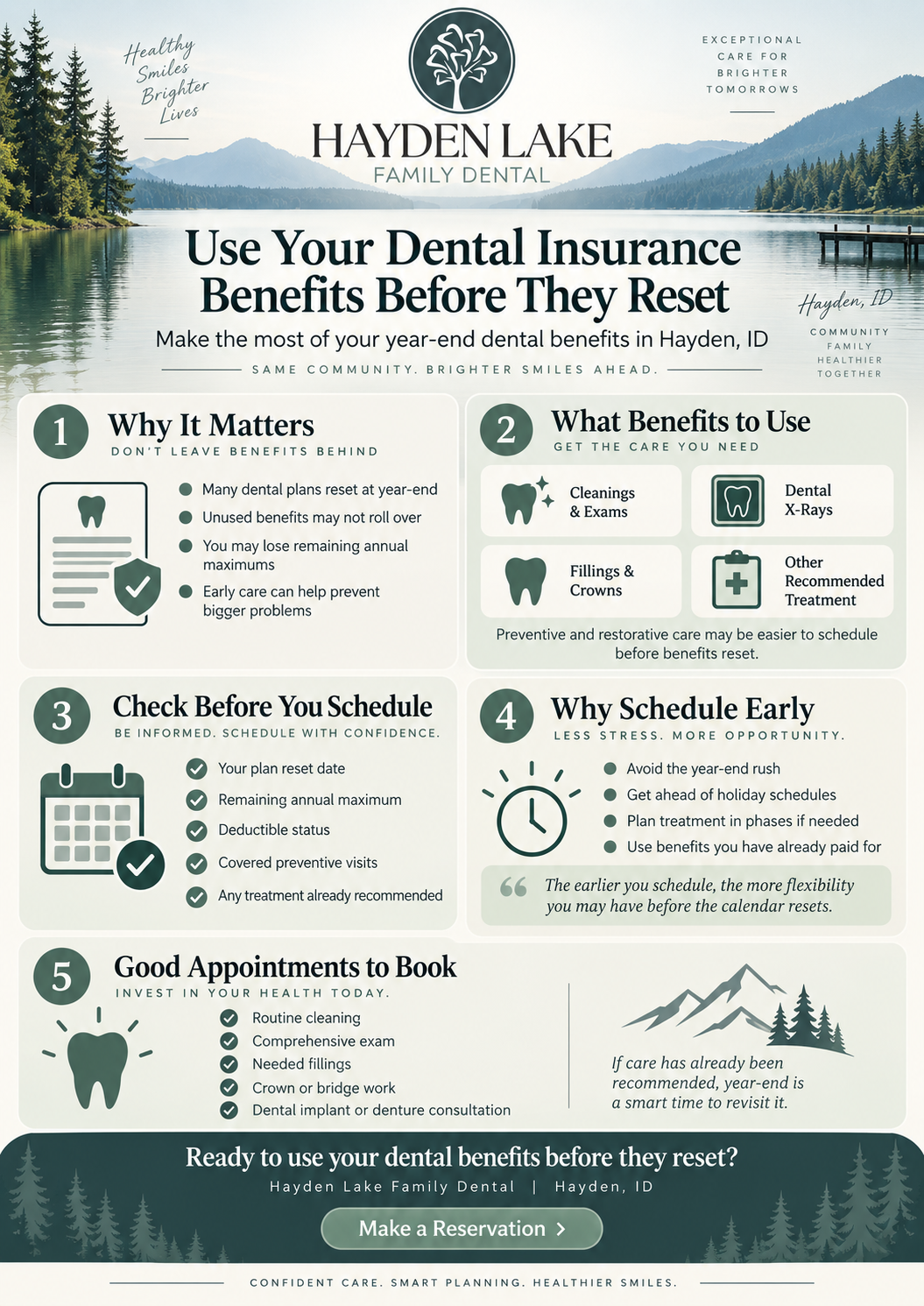
Why Dental Insurance Benefits Matter Before Year-End
Dental insurance can help lower out-of-pocket costs for preventive, basic, and sometimes major dental care. However, most plans have rules around coverage, deductibles, annual maximums, waiting periods, and plan-year timelines.
If your plan resets on January 1, any unused benefits from the current year may expire. That can be frustrating if you have been paying for coverage but have not used your available preventive visits or treatment benefits.
Using your benefits before year-end may help you:
Stay current on preventive care
Complete recommended treatment
Avoid letting available benefits go unused
Address small dental concerns before they worsen
Plan larger treatment in phases
Reduce the chance of dental pain during the holidays
Start the new year with a healthier smile
Because every insurance plan is different, it is always important to confirm your specific coverage with your provider or dental office.
Preventive Dental Care Is Often Covered
Many dental insurance plans include preventive care such as routine cleanings, exams, and diagnostic X-rays. These services are important because they help your dentist identify problems early, often before pain or obvious symptoms appear.
Preventive visits may include:
Professional dental cleaning
Comprehensive or periodic exam
Gum health evaluation
Digital X-rays when needed
Oral cancer screening
Home care recommendations
Treatment planning if concerns are found
If you have not used your preventive benefits this year, now may be a good time to schedule. Routine dental care helps protect your teeth and gums while also giving your dental team a chance to catch small issues before they become more involved.
Don’t Wait Until Pain Becomes the Reminder
Many patients delay dental treatment if a tooth is not hurting. Unfortunately, dental problems often start quietly. A small cavity, cracked filling, gum concern, or worn crown may not cause pain right away, but it can become more serious if left untreated.
By the time tooth pain appears, treatment may be more urgent and potentially more complex.
End-of-year dental visits can help identify concerns such as:
Cavities
Cracked or worn teeth
Damaged fillings
Gum inflammation
Tooth infections
Broken crowns
Bite or grinding concerns
Areas of sensitivity
Taking care of these issues before the year ends may help you avoid discomfort during a busy season and make better use of your remaining benefits.
Your Annual Maximum May Not Roll Over
Many dental insurance plans have an annual maximum, which is the amount the plan may pay toward covered dental care within a plan year. If you have remaining benefits available, they may expire when the plan resets.
For example, if you need a filling, crown, deep cleaning, extraction, denture adjustment, or other dental treatment, scheduling before year-end may allow you to use benefits that are still available.
This is especially important if your dentist has already recommended treatment earlier in the year. Delaying until after the reset may mean starting over with a new deductible or losing access to unused benefits from the current plan year.
Dental Treatment Can Often Be Phased Strategically
If you need more than one procedure, the end of the year can be a good time to talk with your dentist about phasing treatment. Depending on your insurance benefits and the type of care needed, some patients may be able to complete part of their treatment before the reset and continue care in the new year.
This can be especially helpful for larger restorative treatment plans.
Treatment that may benefit from planning includes:
Crowns
Bridges
Dental implants
Dentures
Root canals
Extractions
Fillings
Periodontal care
Emergency dental treatment
Your dental team can help you understand what is urgent, what can be scheduled later, and how to approach care in a way that supports both your oral health and your benefits timeline.
Don’t Forget About Your Deductible
Some dental plans include a deductible that must be met before certain benefits apply. If you have already met your deductible for the year, completing recommended treatment before your plan resets may make financial sense.
Once the new plan year begins, your deductible may start over. That means waiting until January could change what you owe out of pocket.
This does not mean every patient should rush treatment. It does mean that if treatment has already been recommended, it is worth asking whether completing it before year-end would help you use your plan more effectively.
The Holiday Season Can Make Scheduling Harder
One of the biggest challenges with year-end dental care is availability. Many patients try to schedule appointments in November and December once they realize their benefits are about to reset.
At the same time, families are juggling school schedules, travel, work deadlines, holiday gatherings, and weather changes across North Idaho.
Scheduling earlier gives you more flexibility and helps avoid the end-of-year rush. If you already know you need a cleaning, exam, filling, crown, or other treatment, it is better to reserve your appointment sooner rather than waiting until the final weeks of the year.
What If You Haven’t Been to the Dentist This Year?
If you have not been to the dentist this year, there is no need to feel embarrassed. Life gets busy, and many people fall behind on routine care. The important thing is taking the next step.
A year-end dental visit can help you:
Understand your current oral health
Use available preventive benefits
Identify any treatment needs
Ask questions about insurance coverage
Create a plan for the new year
Rebuild confidence in your dental routine
Even if you need additional treatment, starting with an exam gives you clarity and helps your dentist recommend the best path forward.
How to Prepare Before Scheduling
Before scheduling your appointment, it can be helpful to review your dental insurance information. This gives you a better understanding of what may be available before your benefits reset.
Consider checking:
Your plan reset date
Remaining annual maximum
Preventive care coverage
Deductible status
Coverage for fillings, crowns, or other treatment
Waiting periods
Whether pre-authorization is needed
Flexible spending account or HSA deadlines, if applicable
You can also ask the dental office for help reviewing general benefit information. While insurance coverage is ultimately determined by the plan, your dental team can help you understand common questions and prepare for your visit.
Services to Consider Before the End of the Year
The best appointment to schedule depends on your current needs. For some patients, the priority is a routine cleaning and exam. For others, the focus may be completing treatment that has already been diagnosed.
Before your benefits reset, you may want to consider scheduling:
Dental cleaning and exam
X-rays if recommended
Fillings
Crowns or bridges
Root canal treatment
Tooth extraction
Denture consultation or adjustment
Dental implant consultation
Emergency dental care
Gum disease treatment
The goal is not to schedule unnecessary care. The goal is to avoid delaying needed care while benefits you have already paid for go unused.
Local Dental Care Before Your Benefits Reset
If your dental insurance benefits reset at the end of the year, now is a good time to schedule any outstanding dental care. Whether you are due for a cleaning, need an exam, have postponed treatment, or want to plan larger care around your benefits, a dental visit can help you make informed decisions.
At Hayden Lake Family Dental, patients in Hayden and the surrounding North Idaho area receive personalized, comfort-focused care for preventive, restorative, cosmetic, and emergency dental needs. The team can help you understand your oral health, review recommended treatment, and plan appointments before the year-end rush.
If you have been paying for dental insurance, do not let available benefits go unused. Schedule your visit with Hayden Lake Family Dental in Hayden, ID before your plan resets.
Frequently Asked Questions Around Dental Benefits
-
Many dental insurance plans reset at the end of the calendar year, but not all plans follow the same schedule. Some plans reset on a different plan-year date, so it is important to check your specific coverage.
-
In many cases, unused dental insurance benefits do not roll over into the next year. If your plan has remaining preventive benefits or an unused annual maximum, those benefits may expire when your plan resets.
-
If you have already met your deductible and your dentist has recommended treatment, scheduling before your plan resets may help you use your benefits more effectively. Your dental team can help you review timing and treatment priorities.
-
A routine cleaning and exam is a good place to start. If your dentist has already recommended fillings, crowns, root canals, extractions, dentures, implants, or gum treatment, it may be worth scheduling before your benefits reset.
