

Seeing pink in the sink can leave you wondering whether you brushed too hard or need a dental appointment. An occasional irritated spot and gums that bleed repeatedly are different situations, but neither can be diagnosed by looking at your toothbrush alone.
If your gums regularly bleed when brushing or cleaning between your teeth, arrange a dental evaluation. You do not need to wait until they hurt. A dentist can help identify the cause, check the tissues supporting your teeth, and explain what care makes sense.
For families in Hayden and nearby Hayden Lake, that conversation can begin with a clear description of what has changed and how often it happens.
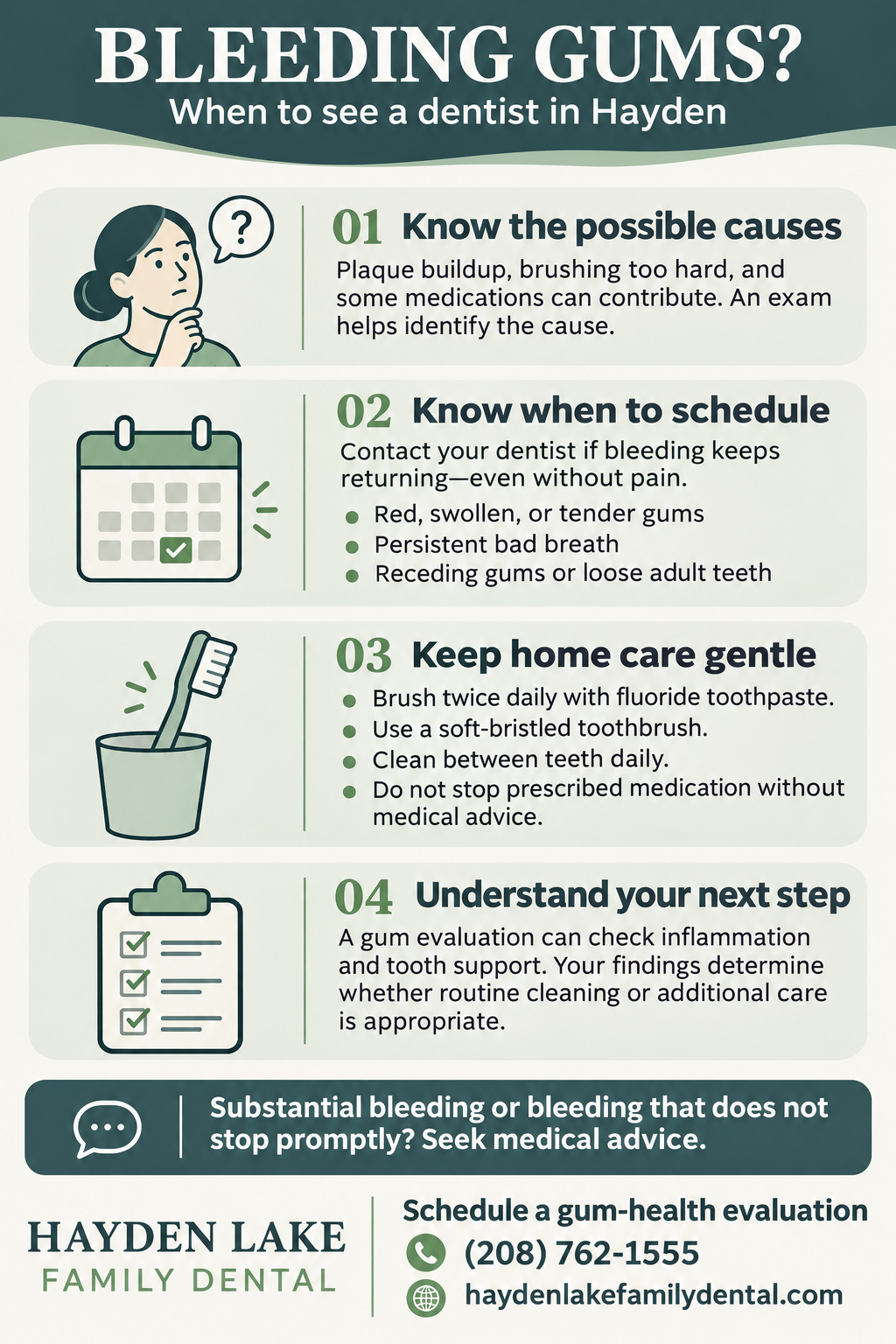
Why Gums Can Bleed
Bleeding can have several causes. Brushing too aggressively may irritate the gums, and starting a new flossing routine can sometimes cause temporary bleeding. Medications, including blood thinners, can also contribute.
Another possible cause is gingivitis, an early stage of gum disease. Plaque accumulating along the gumline can trigger inflammation, making gums more likely to bleed during everyday cleaning.
These explanations can overlap. A person taking medication may also have plaque buildup, for example. That is why changing your toothbrush or buying a different rinse is not always enough to understand the problem.
Tell your dentist about medications and recent changes in your health. Do not stop a prescribed medicine because your gums bleed; discuss that concern with the prescribing clinician.
When Should You Make an Appointment?
Contact a dentist when bleeding happens regularly, keeps returning, or concerns you. Mention whether it affects one area or several areas and whether it occurs only during cleaning or at other times.
Other changes worth reporting include:
Red, swollen, or tender gums.
Persistent bad breath or a bad taste.
Gums that appear to be pulling away from teeth.
Loose permanent teeth or a change in how your bite feels.
Gum disease can develop without much pain. Waiting for a toothache may delay evaluation of a problem that started in the surrounding tissues.
When you contact the office, say that bleeding gums are the reason for your visit. That gives the team more useful information than simply asking for “a cleaning.”
Hayden Lake Family Dental offers family dental care for children, teens, and adults, allowing concerns about a family member’s gums to become part of their individual care plan.
What a Gum Evaluation Can Tell You
An evaluation looks beyond whether your teeth appear clean. Your dental professional may examine the gums, measure the spaces around your teeth, and check for changes in tooth support. X-rays may be recommended when needed to assess the underlying bone.
Your home-care routine and health history also matter. Be ready to discuss tobacco use, diabetes, medications, and when you first noticed bleeding.
You do not need to arrive with a diagnosis. Useful observations might be, “It happens around my lower front teeth every morning,” or, “This started after I changed how I floss.”
Before leaving, ask what the examination showed. Understanding whether you have localized irritation, gingivitis, or a more advanced periodontal concern helps explain the recommended next step.
Will a Regular Cleaning Solve the Problem?
The answer depends on the diagnosis.
Early gum inflammation may improve with professional cleaning and consistent home care. More advanced gum disease can require treatment beyond a routine preventive cleaning, followed by ongoing monitoring.
The practice’s dental services directory includes cleaning and prevention as well as gum-related care. Your examination should guide which services are appropriate; bleeding alone does not establish a particular treatment.
If additional care is recommended, ask:
“What findings support this treatment?”
“How is it different from my usual cleaning?”
“What will we check afterward to see how my gums respond?”
You can also request an explanation of the expected visits and an individual estimate before proceeding. A clear plan should help you understand both the immediate treatment and the follow-up it may involve.
What to Do at Home While Arranging Care
Continue gentle daily cleaning rather than abandoning your routine because you notice bleeding. Brush twice daily with fluoride toothpaste and a soft-bristled toothbrush. Clean between your teeth each day using floss or another suitable interdental cleaner.
Avoid snapping floss into the gums or scrubbing harder in an attempt to remove buildup. Ask your dental professional to demonstrate a technique that fits your mouth. If handling floss is difficult, discuss whether another cleaning tool would be useful.
Home care helps control plaque, but it cannot remove hardened tartar. It also cannot tell you whether there has been a change in the tissues supporting your teeth.
If bleeding is substantial, spontaneous, or does not stop promptly, seek medical advice rather than treating it as a routine brushing issue.
Arrange a Gum-Health Visit in Hayden
You do not have to decide on a treatment before making an appointment. Start by finding out why your gums are bleeding and what the examination shows.
Hayden Lake Family Dental is located at 8636 N. Wayne Dr., Hayden, ID 83835. Patients coming from Dalton Gardens or elsewhere in Kootenai County can contact the Hayden office to discuss their concern and arrange care.
Request an appointment for a gum-health concern or call (208) 762-1555. Describe the bleeding when you contact the team so they can advise you about scheduling.
Frequently Asked Questions
-
Yes. Gum disease can be painless, so bleeding, gum recession, or other changes deserve attention even without a toothache.
-
Do not automatically stop cleaning between your teeth. Use a gentle technique and ask your dentist about recurring bleeding or discomfort. Avoid forcing floss into the gums.
-
Yes. If your child has recurring bleeding, arrange an evaluation rather than assuming it is normal. Their dentist can assess the cause and help you adjust brushing and cleaning techniques.
-
Not everyone does. Depending on the findings and treatment needed, your dentist may recommend a periodontist, a specialist in gum disease.
